
ABM for UK SMEs including the use of AI
ABM for UK SMEs: how to run account-based marketing with a small team, and use AI for account research and outreach without losing credibility. Updated for 2026.

ABM
Account-Based Marketing is a strategy sales and marketing run together, not a campaign marketing runs alone: one short list of companies, worked properly. For an SME, getting that list right is the whole game, because time spent on the wrong accounts cannot be recovered later.
Account-based marketing is a strategy that focuses on identifying target companies and the individuals inside them, then tailoring specific, relevant content to them.
The key to ABM is that sales and marketing work together to identify key accounts and strategic key accounts, and to understand where each one sits in its purchasing process.
In identifying who your key accounts are, you will consider a combination of two things: the accounts contributing most to current revenue, and the accounts with the highest future potential — those whose likely future needs are strongly synergistic with your own product roadmap. The first group are your key accounts. The second are your strategic key accounts.
Strategic key accounts may not be significant revenue contributors today, but are projected to become so after a successful ABM programme.
Your programme will be focused on both groups. Keep the total number of accounts to a level you can genuinely focus on and resource.
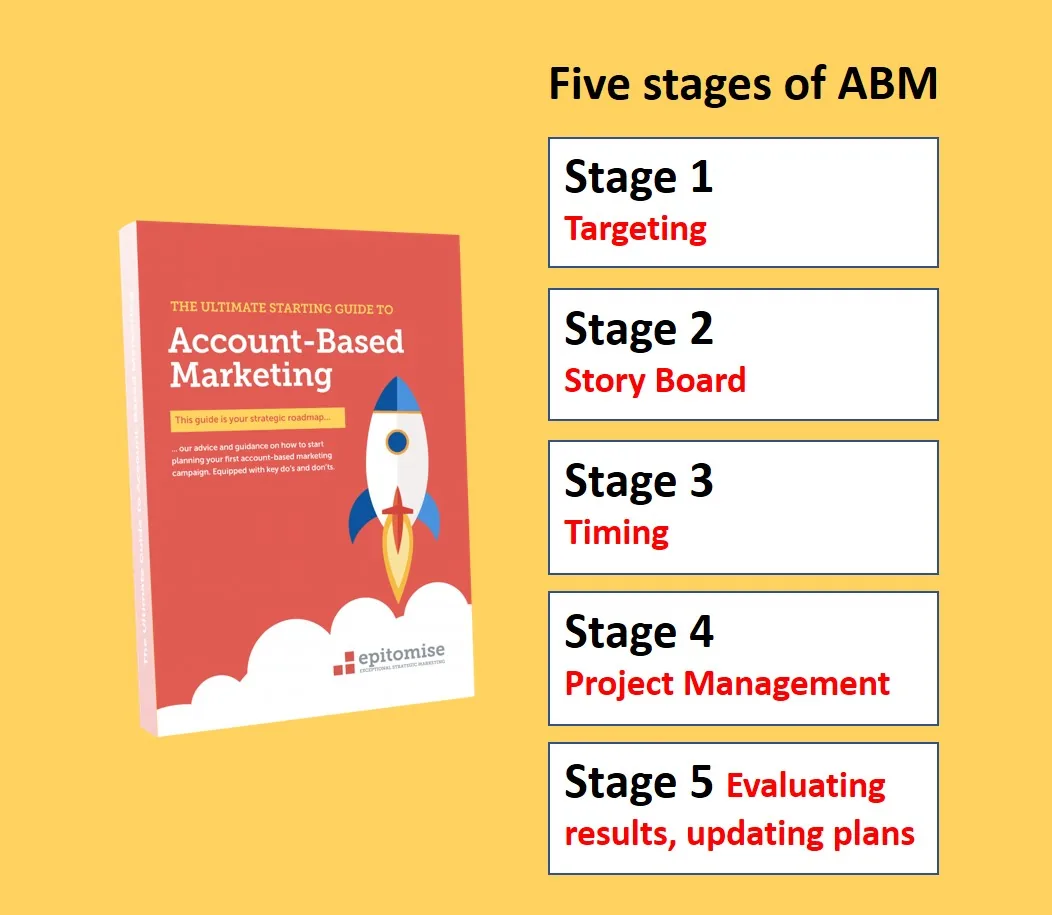
Account selection is the single most important element of any account-based marketing programme.
Start with a customer-centric mindset. Analyse your existing customers and your biggest advocates — the people inside your customer base who use and champion your solution — and map out a list.
Once you have mapped your best customers and your strongest success stories, analyse the companies and people with the highest social proximity to them. These could be past employees, competitors’ customers, vendors, partners, fellow alumni, or close social connections of your best advocates. Identifying accounts this way is often called working your sphere of influence.
This first stage decides the success of everything that follows, so do not rush it. Time spent on the wrong account degrades every result downstream.
When identifying accounts, avoid choosing purely on wallet share — the potential spend of an account, determined by average contract value and total lifetime value. These accounts make sense on a spreadsheet, but every competitor and every adjacent industry is analysing the same names and wants them as customers.
High social proximity shortens sales cycles and improves your probability of winning, because it rests on relationships a competitor cannot simply take from you.
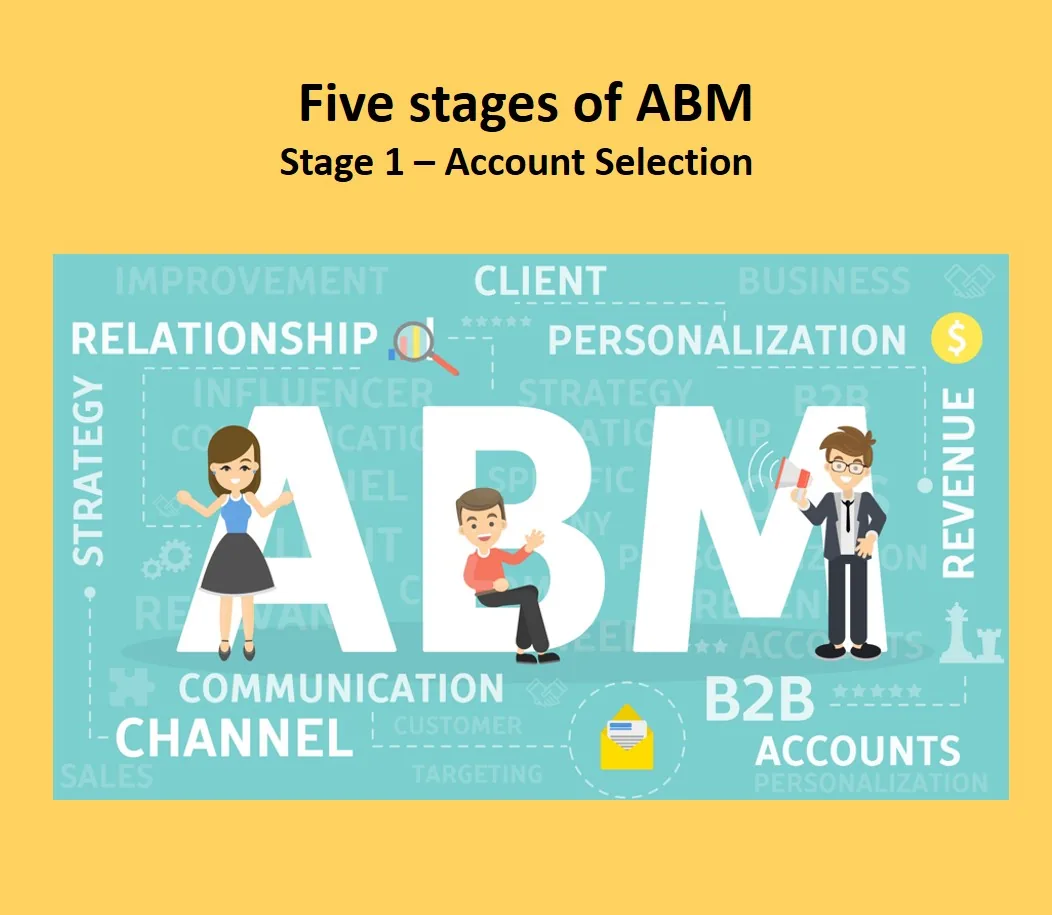
People learn well from visual material — video, infographics and illustrated formats — and that shapes how an ABM story should be built.
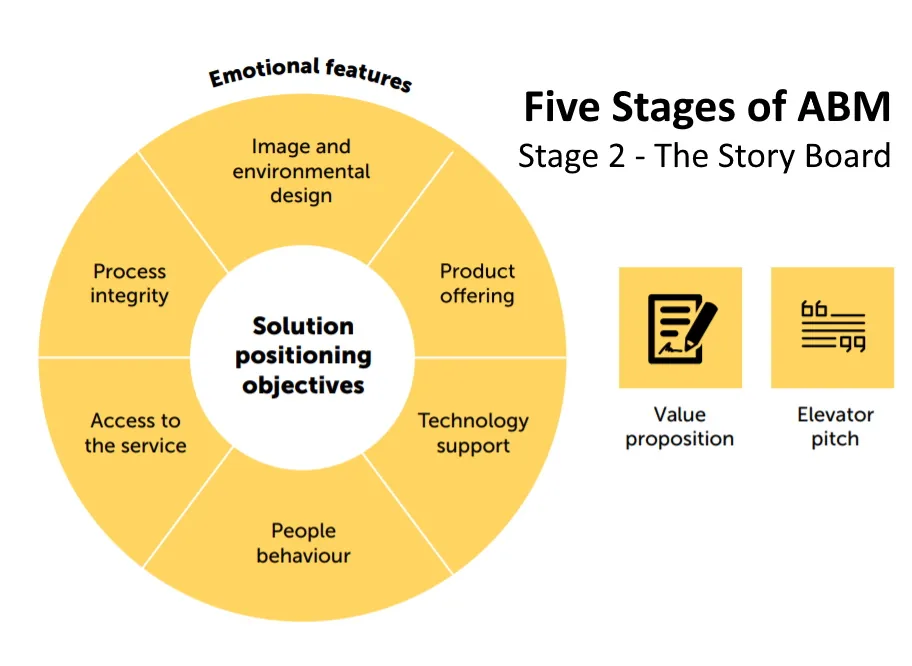
Create a multi-story, multi-touchpoint plan for each account. Every message should be tailored to the interests that account has actually shown in your services.
The most successful value propositions start with a business problem, described in the customer’s words and from their perspective. They move on to how your solution resolves it, the benefits you provide, and the reasons you are a better choice than the alternatives.
Consistency deserves its own sentence. Every brand touchpoint must be unified, so your messaging, brand guidelines and visual identity hold together and build a reputation as a leader in your field.
Resources worth creating as part of the storyboarding exercise include an industry-specific white paper with genuine best practice, a series of thought-provoking articles, and an email nurture track built around the areas of your website those accounts have shown interest in.
Once you have identified your key accounts and created content that resonates with decision-makers and influencers, the next step is to help them make a decision.
Identify the stage of the purchasing process each account has reached and work out what would move it to the next step. You have to be ready with the right content at the right time. The buyer relationship model below is a useful way to reflect on which content works best at each step.
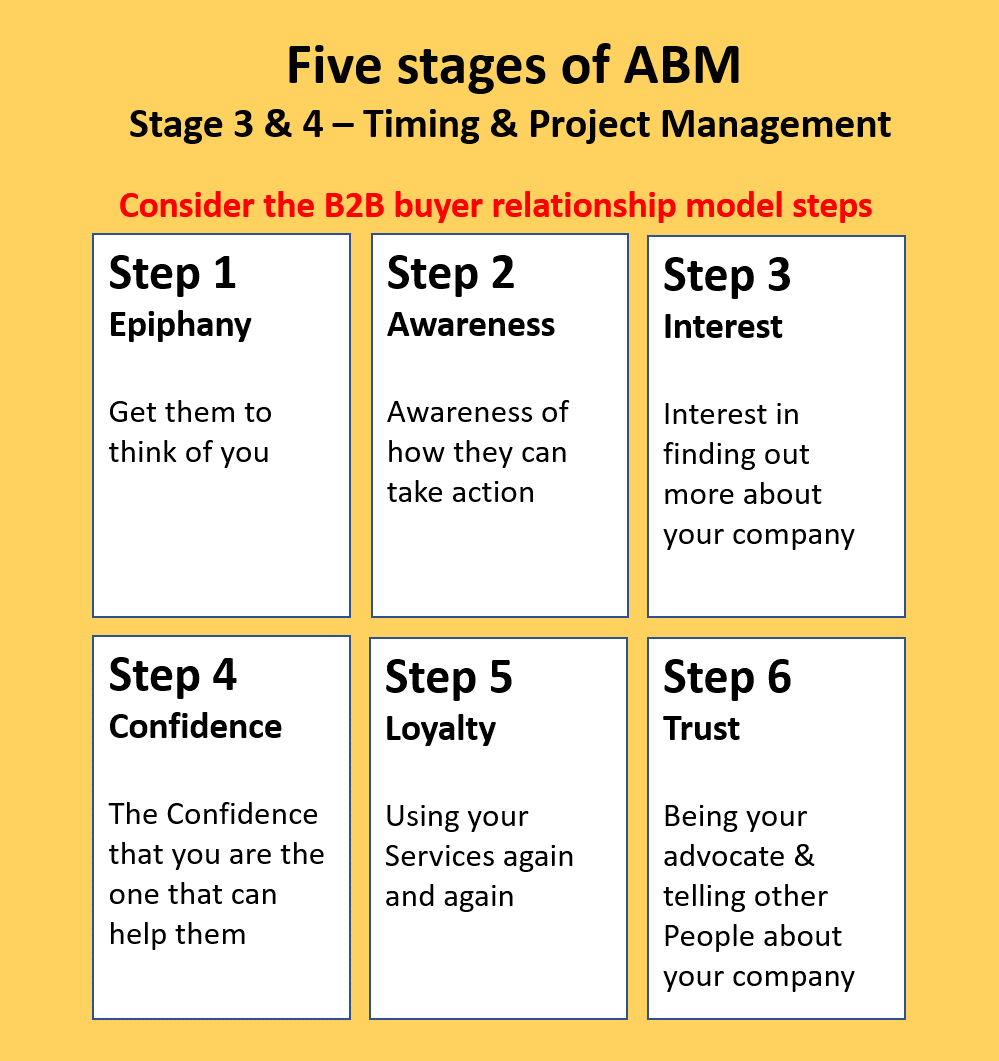
You will run several campaigns inside one ABM plan, so everyone needs to understand their responsibilities, and the project lead needs to manage the whole thing as one programme rather than as parts.
Project lead. One person is ultimately responsible for delivery. Define a calendar of when progress is reported back — weekly by email, a quarterly meeting, or a live dashboard of the KPIs.
Decision-makers. The account team guides activity, analyses the success of each stage, and decides what to deliver next or when to change direction.
Executional team. The working group responsible for delivering the plan. Several campaigns will run in tandem, so there may be sub-groups. Communication matters most here, and frequent updates are essential.
You already know how your team communicates best for quick updates. Set that channel up deliberately, schedule the meetings, and keep a shared space for account documents.
ITSMA’s research, which has spanned a decade, found that ABM generates the highest return on investment of any B2B marketing approach. For it to work, three challenges have to be met.
The first is that you must measure and evaluate return accurately, which is a genuinely complex area.
The second is that you need a point of comparison against other marketing efforts, otherwise you cannot tell whether the ABM route outperformed the alternative.
The third is setting realistic timelines and expectations with every stakeholder. Account-based marketing is a long-term strategic initiative that requires sustained investment to deliver its full result.
Positioning ABM as a company-wide strategic business initiative, rather than as a marketing project, is far more likely to generate a higher return.
Social proximity. The relationship connectivity between people, or between companies.
Client-centric marketing. The management and development of perceptions — managed as deliberately as market share or revenue. It is a programme to improve a client’s perception of your abilities and the value you deliver, using the full range of techniques applied to each client or prospect.
Share of wallet. Also called wallet share: a metric that calculates the percentage of a customer’s spending on a type of product or service that goes to one particular company.
If you want the same approach written for a smaller team, with the practical detail on buying groups, LinkedIn and AI, read our guide to ABM for UK SMEs.
If you would like to talk through account-based marketing for your own business, get in touch.
Who wrote this

Steve founded Epitomise in 2017 after UK, international and global marketing leadership roles, most recently as Global CMO of the Vitec Group’s Videocom Division. He works with SME and technology businesses on strategy, positioning and the execution that follows — more about Steve.
Read next
ABM for UK SMEs: how to run account-based marketing with a small team, and use AI for account research and outreach without losing credibility. Updated for 2026.
Where AI genuinely helps with marketing strategy and where it quietly misleads. A practical workflow for UK SMEs, updated for 2026 with what changed when AI started doing its own research.
Run marketing as a repeatable quarterly cycle — Review, Focus, Implement, Optimise — so strategy turns into shipped work and measurable pipeline.
A short discovery call is usually enough to tell. No deck, no pitch.
Book a discovery call